Does Enbiosis have a scientific base?
Our academic staff and scientific committee carefully select and evaluate publications from high-impact scientific journals. Our artificial intelligence algorithms are continuously trained with new data from test results and client feedback. The Enbiosis team is comprised of prominent researchers and scientists with an extensive publication record and work experience in leading international institutions.
What does the Enbiosis microbiome analysis provide me with?
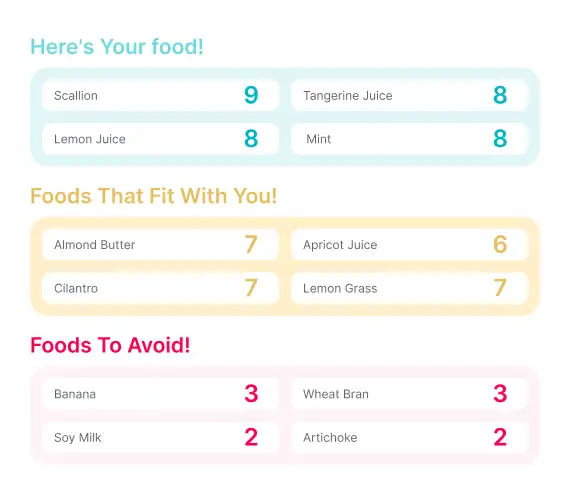
The Personalized Nutrition Guide helps modulate the gut microbiome through nutrition. By showing the relationship between bacteria and nutrients, the guide helps shape a diverse and balanced gut flora — which in turn supports better sleep quality, a regular digestive system, healthy and sustainable weight, higher energy, better stress management and mental performance, a stronger immune system, and better chronic disease management.
How do I collect my sample?
The microbiome analysis is performed on a stool sample, easily collected at home. Keep the tube upright. Unwrap the swab without touching the cotton tip, rub it on the soiled toilet paper until the tip changes colour completely, then place it in the tube and stir for about a minute until the stabilizer liquid changes colour. Discard the swab, close the tube tightly, and place it in the envelope from your kit.
Could my sample be damaged during shipping?
No. The stabilizer liquid in the tube kills microorganisms on first contact with the sample and prevents the fragmentation of the released microbial DNA, protecting it from contamination on its way to the laboratory. The liquid can preserve the sample at room temperature for up to 2 years.
Is the Enbiosis microbiome analysis a diagnostic test?
No. The purpose of the analysis is to assess the current state of the intestinal bacteria and regulate nutrition according to the needs of the microbiome — modulating it over time. It is not used for diagnosis or to detect food allergies and intolerances.
How often should I have the microbiome analysis done?
Following a microbiome-based nutrition plan for 6 weeks reduces symptoms. Because the microbiome is dynamic — shaped by birth type, diseases, medications, and lifestyle — your nutrient scores aren't static and can't be used for a lifetime. We recommend a microbiome analysis twice a year to keep supporting your gut health.
When should I postpone the analysis?
Postpone for 1 month after: use of antibiotics, abdominal surgery, hospitalization for 48+ hours, serious trauma or stress, or colonoscopy/endoscopy. The analysis can be performed during pregnancy, but it's more efficient to do it just before or after.
Why is the analysis process so long?
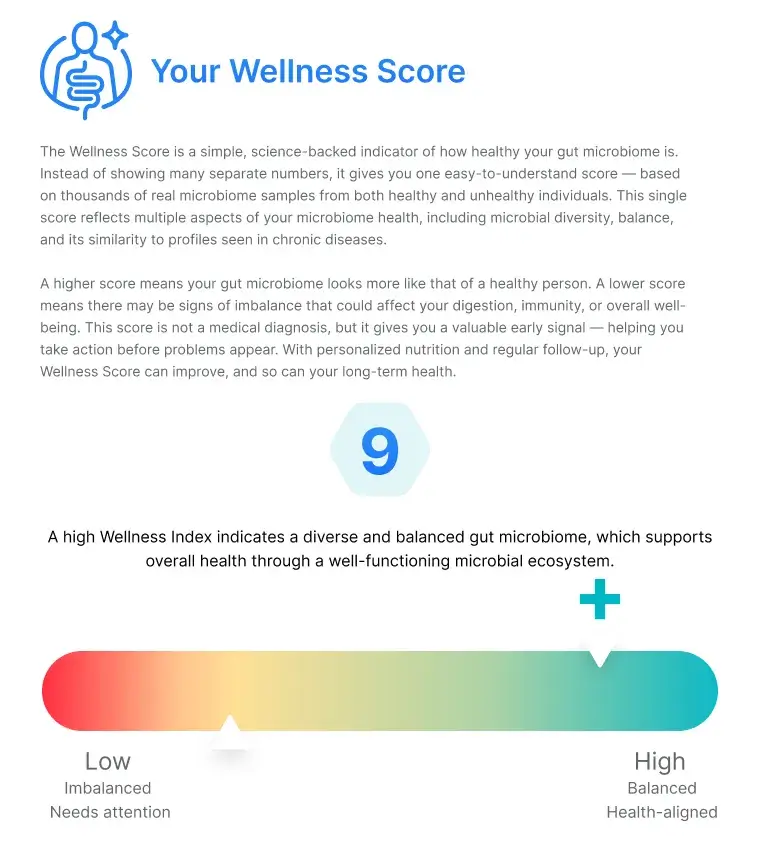
All bacteria in your gut are analysed one by one up to genus level, with their genetic structures examined in detail. The results are then interpreted by AI and converted into numerical scores. This process — which includes both wet laboratory work and AI analysis — takes around 4 weeks on average.
What do the red, yellow and blue colours in the nutrition guide mean?
The nutrient scores regulate nutrition according to the needs of your microbiome. Foods scored 0–3 are colour-coded red — eat less. Foods scored 4–7 are yellow — eat for a balanced and varied diet. Foods scored 8–10 are blue — enrich your diet with these. The aim is to use high-score foods in a balanced and diversified way, not to eat the same foods continuously.
Should I avoid red foods for the rest of my life?
No. The 6-week personalised plan prioritises high-score nutrients while red foods receive low priority — they're not the ones the microbiome needs right now for modulation. After the 6-week period, those foods can be gradually reintegrated into your diet.
Could my psychological problems be caused by my gut health?
The microbiome plays an important role in both psychological and physiological health. The gut–brain axis means the two interact constantly. When the gut microbiome balance is distorted it disrupts the production of serotonin — the happiness hormone — which can leave people feeling more depressed. Studies show psychology and gut health are closely related.
Will my IBS be cured completely?
The degree of improvement varies from client to client and correlates directly with how closely you follow the nutritional recommendations. IBS management is one of our most successful areas — clinical studies on IBS have shown a 78% success rate.